Roof Hail Damage in Iowa: How to Spot It & File an Insurance Claim
Central Iowa takes a beating every storm season. Here’s exactly how to find hail damage on your roof, document it right, and understand how an Iowa hail claim works — from a local roofer who inspects storm damage every week.
★★★★★ 5.0 · 67 Google reviews · BBB A+ · By Scott, Owner of Hutch Unlimited Roofing
If you own a home anywhere in the Des Moines metro — Ankeny, Waukee, Urbandale, Johnston, Clive, West Des Moines, Altoona, or right here in Grimes — hail is not an “if,” it’s a “when.” I’m Scott, owner of Hutch Unlimited Roofing, and after a big Central Iowa storm my phone doesn’t stop ringing. The hardest part for most homeowners isn’t the damage itself. It’s knowing whether they actually have damage, and then understanding what happens next with their insurance company.
This guide walks you through both: how to spot hail damage before it turns into leaks and rot, and how to file a claim the right way so it doesn’t get denied.
Why Central Iowa Is So Hail-Prone
Iowa sits squarely in the part of the Midwest where warm, moisture-heavy air from the south collides with cooler air moving down from the north. That collision is what fuels the severe thunderstorms and supercell systems that drop hail — and it happens most often from April through September. The Des Moines metro sees damaging hail events most years, and a single storm cell can hammer one subdivision while leaving the next one over untouched.
That’s why a “your neighbor got a new roof, so I should too” conversation is so common here. If a storm tracked over your street, there’s a good chance your roof took hits even if the house looks fine from the driveway. Iowa asphalt shingles also age fast under our freeze-thaw winters and blazing summers, which means an older roof bruises and cracks more easily when hail hits.
How to Spot Hail Damage on Your Roof
Please don’t climb up on a wet or steep roof to check — falls send more Iowa homeowners to the ER than hail does. Start from the ground and around the house, then call a pro for the roof itself. Here’s what real hail damage looks like.
1. Granule loss (the biggest tell)
Asphalt shingles are coated in tiny protective granules. Hail knocks them loose, exposing the black asphalt mat underneath. Look for:
- Dark or shiny “bald” spots scattered across the shingles
- A pile of granules — like coarse black sand — collected in your gutters or at the bottom of downspouts
- Sludgy granule buildup in splash areas below downspouts
Once granules are gone, the sun bakes the exposed mat and the shingle fails years early. This is the damage that leads to leaks down the road.
2. Bruises and cracks on shingles
A hail hit often leaves a round, soft “bruise” you can feel with your fingertips — the mat underneath is crushed. You may also see circular cracks, dents, or spots where the shingle surface looks pushed in. Fresh hits usually have random, scattered patterns (not straight lines, which point to a manufacturing or wear issue instead).
3. Dinged gutters, downspouts, and metal
Soft metal shows hail better than anything. Walk the perimeter and check for:
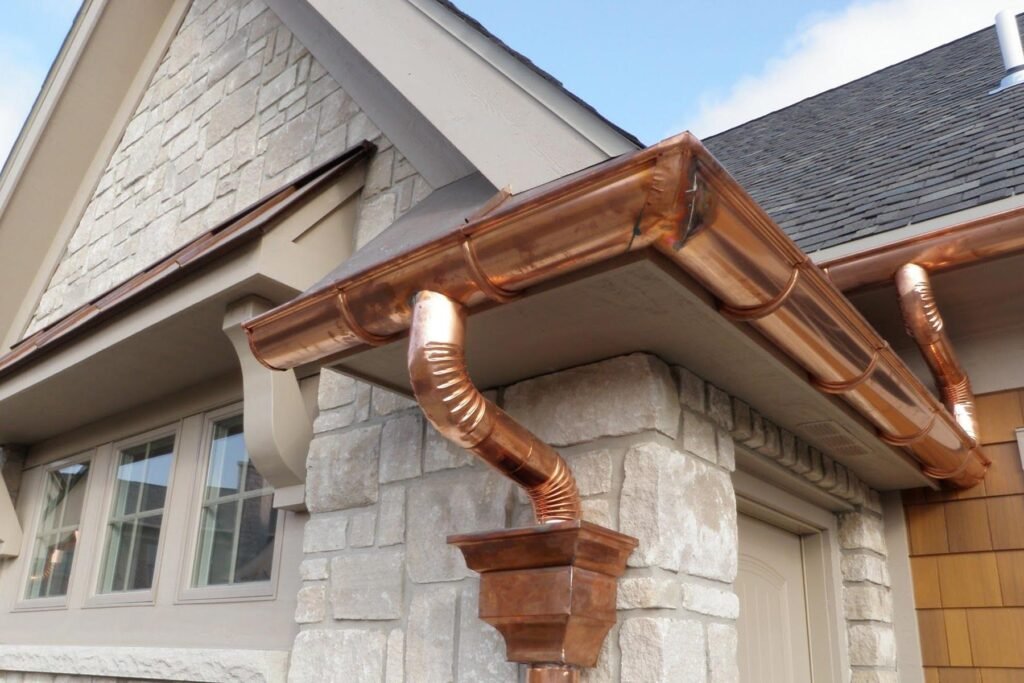
- Dents and dimples on gutters and downspouts
- Dinged aluminum fascia and drip edge
- Dents on metal roof vents, pipe boots, chimney flashing, and your A/C unit’s top fins
If your gutters and vents are pockmarked, your shingles almost certainly took hits too.
4. Damage on windows, screens, siding, and decks
Cracked window screens, dented garage doors, chipped deck paint, and dinged siding are all corroborating evidence. This “collateral damage” matters because it proves a real hail event hit your specific address.
Not sure if you have hail damage?
We’ll climb up, check every slope, and tell you straight — free inspection, no pressure, no sales games.
Filing Your Iowa Roof Hail Insurance Claim: Step by Step
Here’s the process I walk Central Iowa homeowners through after a storm.
- Note the date of loss. Insurers need the specific storm date. Check local Des Moines weather reports or ask us — we track major hail events across the metro.
- Get a professional roof inspection first. Have a local roofer document the damage with photos and a written report before you call your insurer, so you know whether you actually have storm damage. Filing a claim that gets denied still counts against you.
- Document everything. Take dated, close-up photos of granule loss, bruises, dented gutters, and any interior water stains. Save them in one folder.
- Call your insurance company to open the claim. Give them the date of loss and the type of damage. They’ll assign a claim number and schedule a field adjuster.
- Have your roofer’s photo report ready for the adjuster’s visit. Dated photos and a written damage summary are the single most useful thing you can hand over — more on it below.
- Review the scope and estimate. The adjuster writes a “scope of loss.” Compare it against your roofer’s written report and estimate so you can see whether anything (like vents, flashing, or code-required items) was left out, and raise it with your insurer.
- Approve, schedule, and complete the work. Once you give the go-ahead, we handle the build and provide completion photos and a final invoice for your records. Your insurer typically releases the remaining “recoverable depreciation” after the job is finished and documented.
How Hutch Documents Hail Damage
This is where a good local roofer earns their keep. When you hire us, we don’t hand you a quote and disappear. We:
- Do a full documented inspection — every slope, photographed and marked, with a written summary of hail hits per square (the standard “test square” method).
- Give you a written report and line-item estimate you can keep for your records or share with your insurer, so every documented hit is on paper.
- Write the estimate the way the job is actually built — materials, flashing, ventilation, code-required items — so nothing is left off the scope of work.
- Document anything new that shows up once we start the work, with photos, so you have a record if the scope needs to change.
We’re locally owned, based in Grimes, and we’ve been doing this across the Des Moines metro since 2021. If your storm damage is actively leaking, don’t wait for the claim — see our emergency roof repair in Des Moines to get it tarped and protected first.
Claim Timelines & Rough Cost Expectations
Timelines vary by carrier and storm volume, but here’s a realistic Iowa ballpark. All figures below are estimates only — your actual costs and dates depend on your policy, damage, and insurer.
| Stage | Typical Iowa timeframe (estimate) |
|---|---|
| File claim → adjuster inspection | 3–14 days |
| Adjuster scope → approval decision | 1–3 weeks |
| Approval → roof installed | 1–4 weeks (weather dependent) |
| Deadline to file after date of loss | Generally up to 1 year in Iowa |
Out of pocket, you’re generally responsible for your deductible only. On a typical metro home that’s often in the $1,000–$2,500 range (estimate — check your policy), while the insurer covers the rest of an approved replacement.
Common Mistakes to Avoid
- Waiting too long. Damage worsens, evidence fades, and you can blow your filing window. File promptly after a known storm.
- Signing a storm-chaser’s contract on the spot. After big Iowa hail, out-of-state crews flood in, over-promise, and vanish. Hire a local roofer you can find next year.
- Going into the adjuster’s visit with no documentation. Have your roofer’s dated photos and written report in hand so nothing gets missed.
- Paying the “we’ll waive your deductible” pitch. That’s insurance fraud in Iowa — and a red flag the contractor is cutting corners.
- Skipping the paper trail. No dated photos, no claim number, no written scope means a weaker claim.
Handle it right and a hail claim is straightforward. Do it wrong and you’re stuck with a denied claim or a bad roof you paid for twice. When in doubt, get a free local inspection before you call your insurer — it costs you nothing and tells you exactly where you stand.
FAQs
How long do I have to file a hail damage claim in Iowa?
Most Iowa homeowner policies give you up to one year from the date of loss (the storm date) to file a hail claim, though some policies differ — always check yours. Even so, file as soon as you can. Damage gets worse, evidence disappears, and delays make claims harder to prove. We can help you confirm the storm date for your Des Moines-area address.
Will filing a hail claim raise my insurance premium?
Hail is a weather event, not driver behavior, so a single storm claim usually has less impact than an at-fault loss — and after widespread storms, rate changes tend to hit an entire region rather than just you. Every carrier is different, so ask your agent. What you don’t want is to file a claim that gets denied, which is why we recommend a free inspection first to confirm you actually have storm damage.
Can hail damage be invisible from the ground?
Yes — that’s the most common surprise. Bruised shingles and granule loss frequently can’t be seen from the driveway, and a roof can look “fine” while it’s actually storm-damaged and shedding years of life. That’s why a close-up, on-roof inspection matters. If a hail storm tracked over your neighborhood in Ankeny, Waukee, Urbandale, or Grimes, it’s worth having us look.
Should my roofer’s report be ready before the adjuster visits?
Yes. A dated, photo-documented inspection report that counts hail hits per square is the single most useful thing you can have on hand when the adjuster visits. It gives you and your insurer the same record to work from. At Hutch Unlimited, every free inspection across the Des Moines metro ends with that report.
Do you offer free hail damage inspections in the Des Moines metro?
Yes. Free, no-pressure inspections are standard for us across Des Moines, West Des Moines, Ankeny, Waukee, Urbandale, Johnston, Clive, Altoona, and Grimes. We’ll tell you honestly whether you have real storm damage — call (515) 313-7355 or request an instant roof estimate.
Storm rolled through? Let’s check your roof.
Free inspection, honest answers, and a photo-documented damage report — from a local, BBB A+ roofer serving the Des Moines metro since 2021.