What Does Energy-Efficient Roofing Mean?
Energy-efficient roofing reduces the amount of heat your home absorbs and improves how heat moves through the roof system, lowering the burden on your heating and cooling. According to the U.S. Department of Energy, weatherization measures including ventilation and insulation directly affect a home’s energy use.
| Definition — Cool roofA roofing system designed to reflect more sunlight and absorb less heat than a standard roof, keeping the building cooler and reducing air-conditioning demand. |
A knowledgeable roofing contractor evaluates the whole system, not just the shingles. Hutch Unlimited’s roofing services include guidance on materials and ventilation that affect efficiency.
Energy efficiency in roofing is a system property, not a single product. The most reflective shingle in the world underperforms on a poorly ventilated, under-insulated roof, while a modest material can perform well as part of a well-designed system. This is why a contractor’s assessment of your whole roof matters more than any one product claim.
Energy-efficient work should still meet all standard requirements. The Iowa Department of Inspections, Appeals, and Licensing requires construction contractors including roofers to register with the state, and the National Roofing Contractors Association provides guidance on energy efficiency and sustainable roofing practices that reputable contractors follow.
What Are Cool Roofs and Reflective Shingles?
Reflective roofing materials are among the most accessible energy upgrades roofing contractors offer.
- Reflective shingles bounce more solar radiation away from the home
- Cool-roof coatings can be applied to suitable surfaces
- Lighter colors generally reflect more heat than dark ones
- ENERGY STAR rated products meet federal reflectance standards
According to ENERGY STAR, reflective roof products can lower roof surface temperature and reduce the heat transferred into a building, which can cut cooling demand during hot months. A roofing contractor can recommend rated products that suit Iowa’s climate.
Climate context matters when choosing reflective materials. In a region with both hot summers and cold winters like Central Iowa, the goal is a system that reduces summer cooling loads without creating winter problems. A knowledgeable contractor balances reflectance with proper insulation and ventilation so the roof performs year-round, not just in July.
How Do Ventilation and Insulation Improve Efficiency?
The roof surface is only part of the equation. What happens in the attic matters just as much.
- Proper intake and exhaust ventilation moves hot air out of the attic
- Ridge and soffit vents work together for balanced airflow
- Adequate insulation slows heat transfer between attic and living space
- Reduced attic heat lowers cooling costs and protects shingles from premature aging
Poor ventilation traps heat that bakes shingles from below and drives up cooling bills. Roofing contractors address ventilation during installation, and Hutch Unlimited handles related work like gutter installation and roof-edge components that tie into the ventilation system.
Moisture control is the hidden partner of energy efficiency. Proper ventilation not only removes heat but also carries away the moisture that would otherwise condense in the attic, where it can damage insulation and decking. An efficient roof is therefore also a healthier, longer-lasting roof.
Is Metal Roofing Energy Efficient?
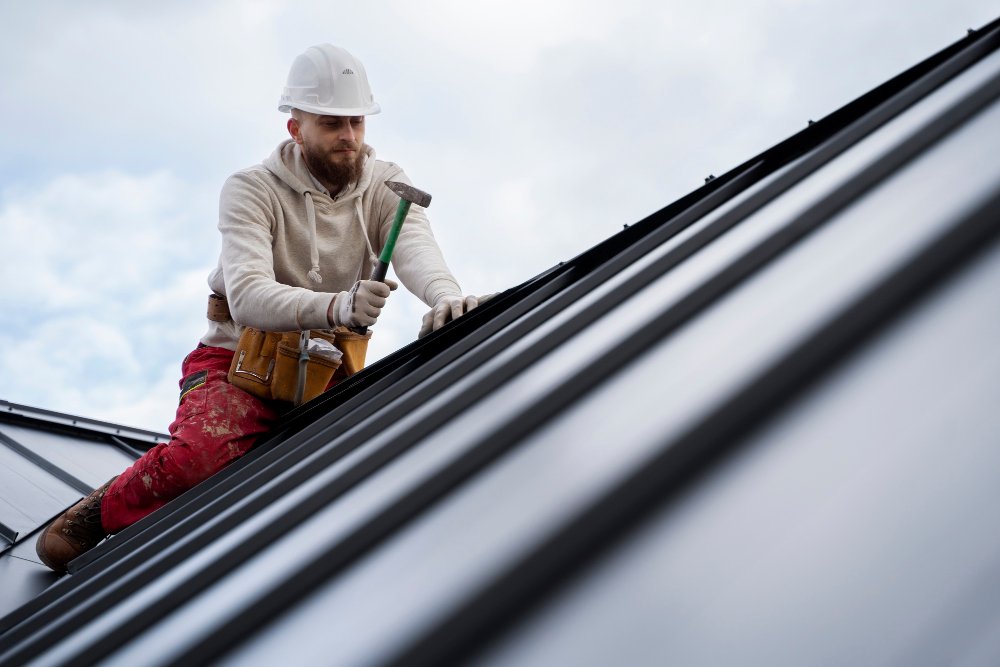
Metal roofing is one of the most energy-efficient options roofing contractors install, especially with reflective finishes.
| Feature | Energy benefit |
|---|---|
| Reflective coatings | Bounce solar heat away |
| Long lifespan | Fewer replacements over decades |
| Recyclable material | Lower environmental footprint |
| Pairs with ventilation | Reduces attic heat buildup |
Metal costs more upfront, but its 40-to-50-plus-year lifespan and energy performance make it attractive for homeowners planning to stay long term. A roofing contractor can compare metal against reflective shingles for your specific home.
When weighing metal against reflective shingles, factor in how long you plan to stay in the home. Metal’s higher upfront cost makes the most sense for homeowners who will be there long enough to enjoy decades of low maintenance and energy savings, while reflective shingles offer efficiency at a more accessible price point.
What Do Energy-Efficient Roofing Options Cost and Save?
Energy-efficient upgrades carry a higher upfront cost but deliver returns over time through lower bills and longer roof life.
- Reflective shingles often cost only modestly more than standard ones
- Improved ventilation is a relatively low-cost, high-impact upgrade
- Metal roofing has the highest upfront cost but the longest payback horizon
- Some efficient products may qualify for utility rebates or tax incentives
Check current federal incentives, as programs change. A roofing contractor familiar with energy-efficient roofing can point you toward eligible products, and financing can make upgrades affordable.
Budget context helps frame efficiency upgrades. According to Angi, roof replacement generally runs $4 to $11 per square foot, and energy-efficient materials sit toward the higher end, which is where financing and long-term savings enter the decision.
How Do I Choose the Right Energy-Efficient Roofing Option?
The best choice depends on your budget, how long you plan to stay, and your home’s existing system.
- Have a roofing contractor assess your current ventilation and insulation.
- Decide between reflective shingles and metal based on budget and timeline.
- Prioritize ventilation improvements for the best cost-to-benefit ratio.
- Confirm products carry ENERGY STAR or equivalent ratings.
- Get a written estimate that itemizes the efficiency upgrades.
Start with a free instant roof estimate and a conversation about your energy goals with experienced roofing contractors.
Ask your contractor to explain the efficiency rationale behind each recommendation. Understanding why a particular shingle, color, or ventilation setup suits your home turns you into an informed participant rather than a passive buyer. The most satisfying energy-efficient roofs come from a collaborative process where the homeowner understands the trade-offs and chooses the system that fits both their budget and their long-term plans for the home.
How Do Roof Color and Slope Affect Energy Efficiency?
Two factors homeowners often overlook, color and slope, meaningfully influence how much heat a roof absorbs and how efficiently the system performs.
- Lighter shingle colors generally reflect more sunlight than dark ones
- Reflective granules can boost performance even on mid-tone shingles
- Steeper slopes shed snow and water but expose more surface to sun
- Slope and orientation affect how much direct sun the roof receives
A roofing contractor weighs these factors together with your home’s orientation and your aesthetic preferences. The right combination of color, material, and ventilation, available through specialists in energy-efficient roofing options, delivers efficiency without forcing you to compromise on how your home looks.
Is Energy-Efficient Roofing Worth It Long Term?
The case for efficient roofing strengthens over time. While the upfront cost can be higher, the returns accumulate across the roof’s lifespan.
- Lower cooling bills every summer the roof is in place
- Reduced strain on the air-conditioning system, extending its life
- Longer shingle life from cooler attic temperatures
- Potential rebates or incentives on qualifying products
- Improved home comfort and resale appeal
For homeowners planning to stay in their home for many years, the cumulative savings and comfort make efficient roofing a sound investment, particularly when paired with financing that spreads the upfront cost.
Want an Energy-Efficient Roof in Central Iowa?
| Hutch Unlimited Roofing helps homeowners across Des Moines, Grimes, Waukee, Ankeny, and Central Iowa choose energy-efficient roofing, from reflective shingles to improved ventilation and metal systems. You get expert guidance, quality installation, financing options, and a 5.0 business rating. Contact us to explore options that cut energy costs and extend your roof’s life.→ Explore Efficient RoofingCall 515-313-7355 | 2407 NE 12th St, Grimes IA 50111 |
Frequently Asked Questions
Do roofing contractors install energy-efficient roofs?
Yes. Roofing contractors offer reflective cool-roof shingles, ENERGY STAR rated materials, energy-efficient metal roofing, and improved attic ventilation and insulation. These upgrades reduce cooling loads and can extend the life of roofing materials.
What is a cool roof?
A cool roof reflects more sunlight and absorbs less heat than a standard roof, keeping the building cooler and reducing air-conditioning demand. Reflective shingles and coatings are common ways roofing contractors achieve this.
Does attic ventilation really save energy?
Yes. Proper intake and exhaust ventilation removes hot air from the attic, lowering cooling costs and protecting shingles from premature aging caused by trapped heat. It is one of the most cost-effective efficiency upgrades.
Is metal roofing more energy efficient than shingles?
Often, especially with reflective coatings. Metal reflects solar heat, lasts 40 to 50 years or more, and pairs well with ventilation. The higher upfront cost is offset by longevity and energy performance over time.
Do energy-efficient roofs qualify for tax credits?
Some efficient products may qualify for utility rebates or federal tax incentives, but programs change frequently. Confirm current eligibility, and ask a roofing contractor which rated products apply to your project.
How much more do reflective shingles cost?
Reflective shingles often cost only modestly more than standard shingles, making them an accessible efficiency upgrade. Improved ventilation is another low-cost, high-impact option a contractor can include in the estimate.
Conclusion
Roofing contractors offer a full range of energy-efficient options, from reflective cool-roof shingles and ENERGY STAR materials to energy-efficient metal roofing and improved attic ventilation. These upgrades lower cooling costs, extend roof life, and improve year-round comfort in Iowa’s demanding climate. Working with knowledgeable roofing contractors ensures