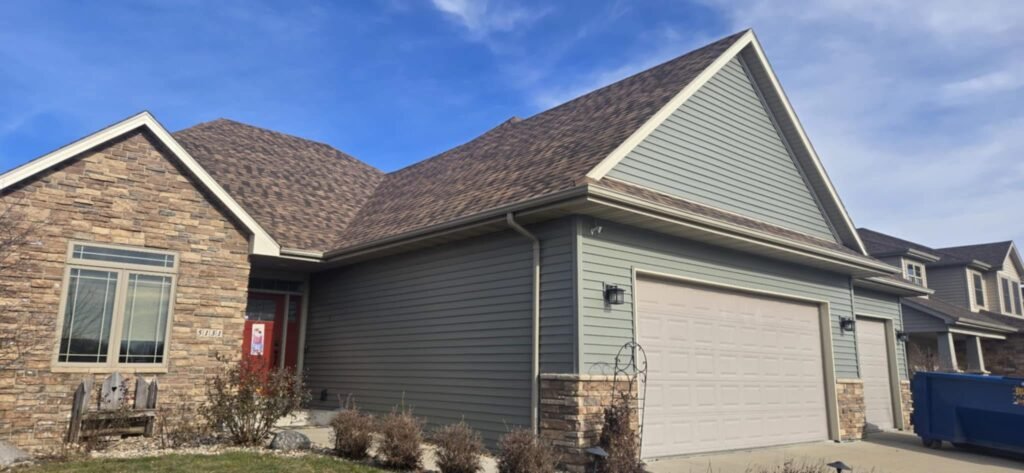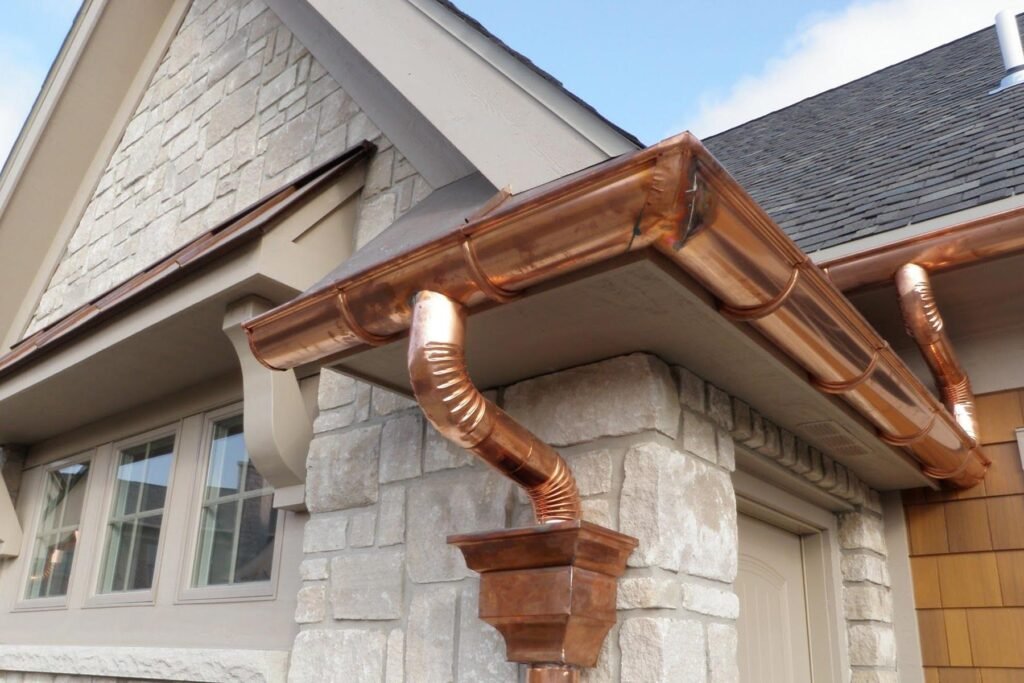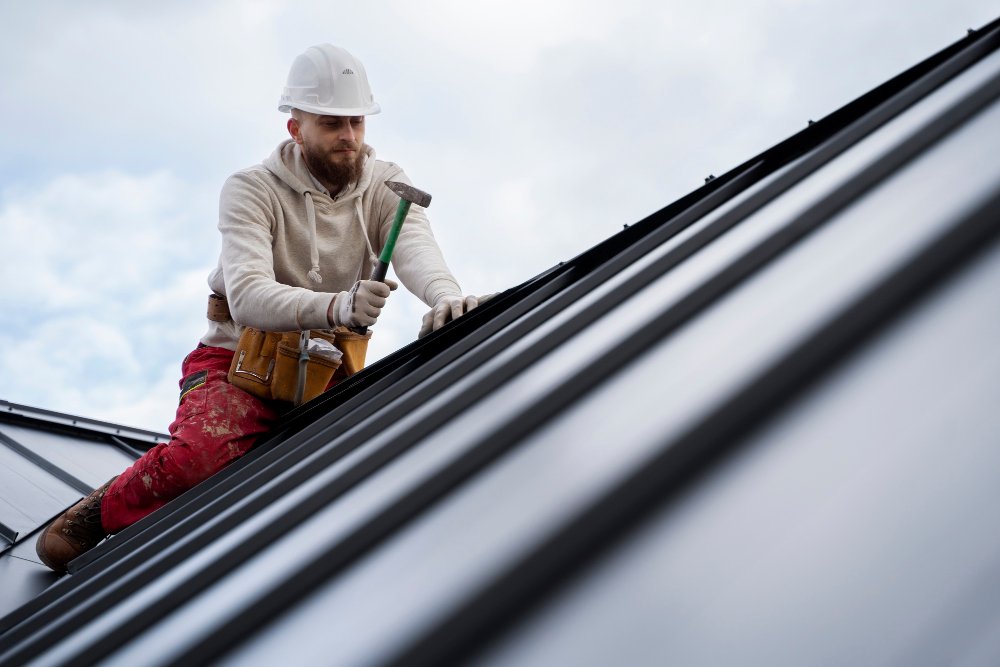

For Central Iowa hail, the best-performing materials are Class 4 impact-rated products under UL 2218: polymer-modified asphalt shingles, stone-coated steel, standing-seam metal and synthetic composite. Class 4 means a 2-inch steel ball dropped from 20 feet left no crack through the shingle’s back. No roof is hail-proof.
Every spring we get the same call from Grimes, Johnston and Ankeny. A storm rolls through, the neighbor’s roof gets replaced, and the homeowner asks what to put back up.
What is the best roofing material for Iowa hail?
There is no single winner, but the shortest honest answer is a Class 4 impact-rated roof. Among asphalt shingles, polymer-modified (SBS) Class 4 products test best. Stone-coated steel and standing-seam metal resist puncture better than any shingle. Synthetic composite sits between them on cost and performance.
Class 4 asphalt is the practical choice for most homes in Urbandale, Clive and Waukee. Iowa is not a headline hail state, but the exposure is real: NOAA’s NCEI counts 86 billion-dollar disasters affecting Iowa from 1980 to 2024, 57 of them severe storms, running 5.4 a year in 2020-2024 against a 1.9 long-run average, per NOAA NCEI.
What do UL 2218 Class 1 through Class 4 ratings mean?
UL 2218 rates roof coverings Class 1 through Class 4 by dropping a steel ball on them. Class 1 uses a 1.25-inch ball, Class 2 uses 1.50 inches, Class 3 uses 1.75 inches and Class 4 uses 2.00 inches. Each falls from the height matching a hailstone’s energy.
Malarkey gives the heights: Class 3 is a 1.75-inch ball from 17 feet, Class 4 a 2-inch ball from 20 feet, passing only if no cracks show on the back face. GAF describes the same test for Timberline AS II, dropped twice on one spot. In the IBHS test method, the pass criterion is the hidden underside, not the face you see from the driveway.
Why a Class 4 rating does not mean hail-proof
A Class 4 label means a product passed a lab test, not that it will survive an Iowa storm undamaged. In its 2014 study, IBHS found none of 22 shingle products from five manufacturers, basic or impact-rated, passed more than Class 2 impacts without at least one double-impact location failing. Formulations have changed since.
IBHS ratings published 19 November 2025 covered 24 products, roughly 95 percent of impact-resistant shingles sold annually. Most earned Good and none achieved Excellent, per the IBHS news release. Chief Engineer Dr. Anne Cope said “when hail strikes, not every product delivers on that promise.” IBHS also warns UL 2218 criteria do not necessarily match what insurers use to decide repair versus replacement. The hail sizes that damage each roofing material, and what an adjuster physically measures on the roof, are set out in our Iowa hail damage insurance claim guide.
Architectural vs 3-tab shingles: how much does the upgrade buy you?
Less than most people assume. In that 2014 testing, IBHS measured passing rates by impact location: basic 3-tab passed 43, 23, 27 and 23 percent of Class 1 through Class 4 impacts, and basic architectural passed 55, 42, 33 and 32 percent. Overall, architectural performed 5 to 20 percent better.
The real gap is basic versus impact-rated. Impact-rated architectural beat basic architectural by 25 to 80 percent, and impact-rated 3-tab beat basic 3-tab by 55 to 225 percent. Thicker is not tougher: premium architectural tested 15 to 40 percent worse than impact-rated.
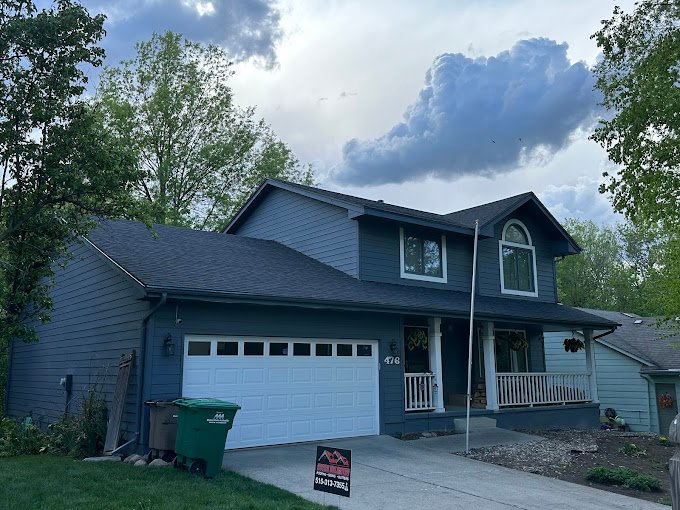
Why some roofs dent without actually failing
Because dents are not failures under the standard. IBHS states that crushed granules, dents or openings visible only on a shingle’s top are not failures under UL 2218. Only tearing, cracking or rupturing visible on the back counts.
Metal makes it clearer. DECRA says its stone-coated steel meets Class 4 and is warranted against hail penetration to 2.5 inches, but an indent at the impact site is aesthetic, not a functional damage claim. That is why a roof can look beaten up and still be watertight, and why two contractors can walk the same Beaverdale roof and disagree. See our guide on whether to repair or replace a roof.
Standing-seam and stone-coated metal roofs
Metal is the most puncture-resistant residential option we install. Standing-seam panels use concealed fasteners and long unbroken runs, so there are fewer places for water to get in. Stone-coated steel gives that strength in a shingle or shake profile, which suits older streets better.
The trade-off is cosmetic. A standing-seam roof near the Drake Neighborhood can show dimples and never leak; stone-coated profiles hide dents because the granules break up light.
Lifespan is where metal wins. The InterNACHI life expectancy chart puts metal at 40 to 80 years against 20 for 3-tab and 30 for architectural asphalt, nationally, and warns hail-prone areas run shorter. More on our metal roofing in Des Moines page.
Is synthetic or composite roofing worth it in Central Iowa?
It is worth it on the right house, and not on most. DaVinci Roofscapes composite slate is UL 2218 Class 4, wind resistant to 110 mph, Class A fire rated with standard underlayment, and carries a 50-year limited warranty, per Westlake Royal.
On a period home in South of Grand that wants slate’s look without the structural weight, composite is the right call. On a two-story in Ashland Meadows or Prairie Trail, a Class 4 shingle gets most of the protection for less.
Roofing material comparison for Central Iowa homes
Figures below are national baselines, not Iowa quotes. Hail shortens every lifespan here, and our field ranges for how long a roof actually lasts in Iowa run several years shorter than the national column.
| Material | Hail performance | Lifespan | Cost | Discount |
|---|---|---|---|---|
| 3-tab asphalt | Weakest: 43% of Class 1, 23% of Class 4 | About 20 years | Lowest | Only if UL 2218 rated |
| Standard architectural | Only 5-20% better than 3-tab | About 30 years | Low | Only if UL 2218 rated |
| Premium architectural | 15-40% worse than impact-rated | About 30 years | Medium | No. Weight earns nothing |
| Class 4 asphalt, mesh-backed | 25-80% better than basic architectural | About 30 years | Medium | May qualify; ask carrier |
| Class 4 asphalt, polymer-modified | 20-50% better than mesh-backed | About 30 years | Medium-high | May qualify; ask carrier |
| Stone-coated steel | Class 4; penetration warranty to 2.5 in. | 40-80 years | High | May qualify; ask carrier |
| Standing-seam metal | Very high; pans show dents | 40-80 years | $14,000-$38,000 | May qualify; ask carrier |
| Synthetic composite slate | Class 4, wind rated to 110 mph | 50-year warranty | High | May qualify; ask carrier |
Fixr puts US roof replacement at $4.75 per square foot on average, in a $3.75 to $11 range: $6,000 to $10,000 for asphalt, $14,000 to $38,000 for metal on a 2,000 square foot roof. See our roof replacement cost in Des Moines.
Not sure which fits your house? Call Hutch Unlimited at (515) 313-7355 or request a free instant roof estimate.
Class 4 shingle lines worth asking about
Most major manufacturers now make a Class 4 line, and the differences matter. Ask your roofer which of these they install and which specific product they are quoting.
- Malarkey lists Vista and Legacy as Class 4, Highlander as Class 3. Its NEX polymer-modified asphalt adds rubber-like elasticity.
- GAF Timberline AS II uses a proprietary SBS-modified asphalt formulation and passes Class 4.
- IKO Nordic is an SBS polymer-modified full-laminate architectural shingle, described as Class 4 in dealer literature. Nordic is the only IKO line rated Class 4.
- CertainTeed Landmark IR meets Class 4 at time of manufacture and, per the product data, must go on as a tear-off.
The SBS point matters more than the brand name. IBHS found polymer-modified impact-resistant shingles performed 20 to 50 percent better than mesh-backed ones, and at least 40 percent better at the larger ball sizes. Ask which type you are quoted.
Will a Class 4 roof lower your Iowa insurance premium?
Often yes, but nobody can promise a percentage. The Iowa Insurance Division says upgrading to Class 4 impact-resistant shingles can significantly reduce the risk of roof damage and may also qualify for insurance discounts. It publishes no figure, so ask your carrier and get any credit in writing first.
Be skeptical of any roofer quoting a hard number. No Iowa statute or rule requires carriers to offer this credit, and even in Texas, the state most cited as mandating it, the regulator says the amount is set company by company.
There is also a cosmetic waiver trade-off most sales pitches skip. GAF warns that carriers discounting Class 3 and Class 4 roofs may require a cosmetic waiver endorsement in exchange, and those waivers can limit future hail coverage, including damage that never leaks. Texas made this formal with Endorsement HO-145. That is a Texas form, not Iowa law, but the trade-off exists here.
Many Iowa policies now carry a roof settlement endorsement that swaps replacement-cost coverage for actual cash value, or sets depreciation by roof age and material. The insurer pays the depreciated amount and you cover the rest plus the deductible. More in does insurance cover roof replacement in Iowa.
What goes under the shingle matters just as much
You can buy the best Class 4 shingle made and still lose the roof if the deck, fasteners and edges are wrong. IBHS reports a sealed deck plus better attachment and edge detailing can cut water intrusion by as much as 95 percent, per Roof 101. Specify these on any re-roof:
- Ring-shank nails in a tighter pattern, not the code minimum.
- A sealed roof deck, so water past the shingles never reaches ceilings.
- Drip-edge detailing at eaves and rakes, where wind-driven rain enters first.
- Full tear-off rather than a layover, which CertainTeed requires for Class 4.
- Matching impact-rated ridge cap, a weak point on an otherwise Class 4 roof.
The Insurance Information Institute reports severe convective storms caused $51 billion in US insured losses in 2025, with hail driving up to 80 percent of those claims and roofs taking 70 to 90 percent of insured residential losses.
How do you choose the right material for your house?
Work through five questions in order and the decision usually makes itself. Budget decides between the finalists, not all eight.
- How long are you staying? Under 10 years, Class 4 asphalt. Past 20, metal pays for itself.
- What does your carrier credit? Call your agent first. A credit with no cosmetic waiver changes everything.
- Do dents bother you? If so, skip flat standing-seam pans for stone-coated steel or a polymer-modified shingle.
- What does the street look like? Architectural shingle fits most of Ankeny and Waukee; a Beaverdale period home suits composite slate.
- How complex is the roof? Valleys and penetrations raise cost in any material, and flashing quality matters more.
If your roof was hit this season, deal with the claim before you shop materials. Our walkthrough of an Iowa hail damage insurance claim explains the sequence; we provide photo-documented inspections across Polk, Dallas and Boone counties.
Hutch Unlimited is locally owned, based at 2407 NE 12th St in Grimes, and serves Des Moines, West Des Moines, Ankeny, Urbandale, Johnston, Clive, Altoona, Waukee, Bondurant and Boone. Ask any roofer, us included, for material and workmanship warranties in writing.
Call (515) 313-7355 or contact Hutch Unlimited for a free inspection and estimate. We will tell you what is on your roof, what the storm did, and what a better one costs.
Frequently Asked Questions
How much more does a Class 4 roof cost than a standard shingle roof?
More, but no honest roofer can quote a percentage before seeing the house. The premium figures online come from marketing pages and contradict each other. Roof size, pitch, tear-off layers and product choice all move the number. Ask for a quote priced both ways.
Does a Class 4 roof mean my insurer will always pay a hail claim?
No. IBHS states that UL 2218 performance criteria do not necessarily reflect the criteria insurers use when deciding whether to repair or replace a roof after hail. Class 4 is a lab result, not a claims outcome. Your policy, deductible and the adjuster decide.
Can I install Class 4 shingles over my existing roof?
Not if you want the rating to hold. CertainTeed specifies Landmark IR must go on as a new roof or tear-off, not over existing shingles, to achieve Class 4. A layover also hides deck damage and shortens fastener holding power. Budget for a tear-off.
How do I know if my current roof is impact rated?
Check your original invoice, or the shingle wrapper if the last contractor left one in the attic. The product name usually includes IR, AS or a Class 4 designation. With no paperwork, we can usually identify the shingle from a sample during a free inspection.
Does hail damage metal roofs?
Hail dents metal, but denting is not failure. DECRA classifies an indent or impact-site granule loss on its stone-coated steel as aesthetic rather than a functional warranty claim, and warrants against penetration to 2.5 inches. Flat standing-seam pans show dents most.
What is the difference between mesh-backed and polymer-modified Class 4 shingles?
Both carry the same Class 4 label and they do not perform the same. Mesh-backed products bond a reinforcing fabric to an ordinary shingle; polymer-modified (SBS) products change the asphalt itself so it flexes. IBHS measured polymer-modified shingles performing 20 to 50 percent better than mesh-backed. Ask which type is on your quote.
How long does a hail-damaged roof have before it leaks?
Sometimes years, sometimes one freeze-thaw cycle. Hail bruising fractures the mat under the granules, and Iowa winters then work water into those fractures. A roof that looks fine in July can leak the following March, which is why prompt documentation matters.
Should I file a claim for cosmetic dents only?
Talk to your agent before you file. If your policy carries a cosmetic damage exclusion or a roof settlement endorsement, a cosmetic-only claim may not be covered. The Iowa Insurance Division notes policies may include exclusions, specific hail deductibles and filing deadlines.
Is a metal roof louder in an Iowa hailstorm?
It can be, but far less than people expect. A residential metal roof laid over a solid deck with underlayment is much quieter than metal over open purlins on a barn. Stone-coated steel is quieter again, because the granulated surface breaks up impact noise.
Do I need a new roof after every hailstorm in Des Moines?
No, and any contractor who says yes after a drive-by should be shown the door. Plenty of storms leave granule scatter and gutter dings without compromising the covering. The only way to know is a proper inspection of the field, ridge and vents.